
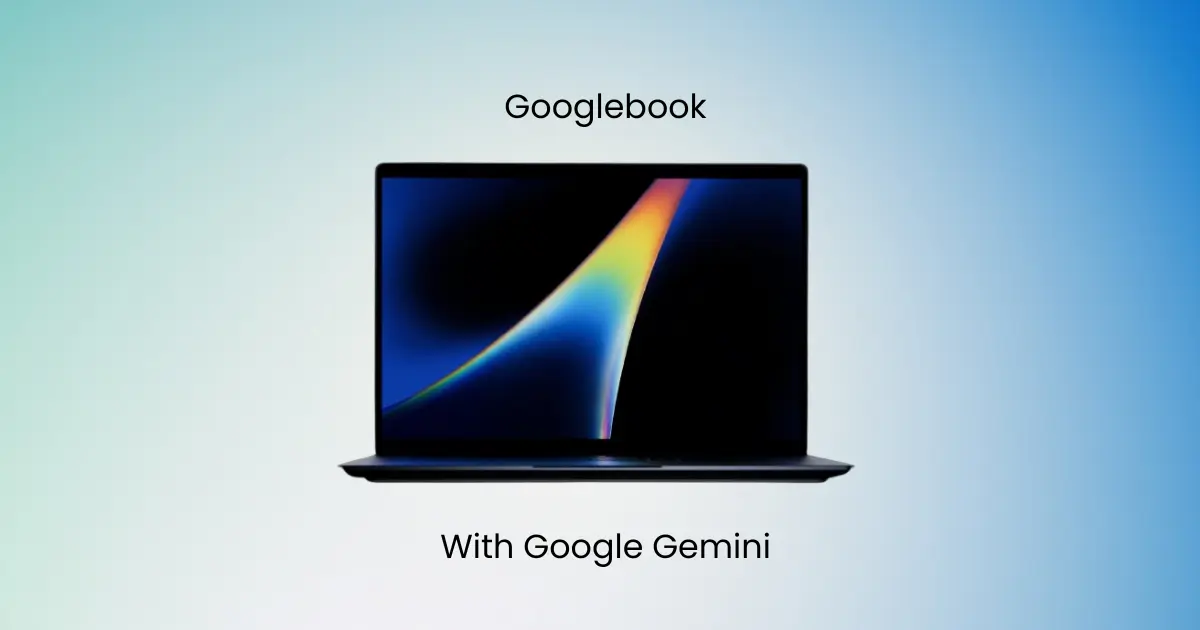
Google has officially introduced Googlebook, a brand-new laptop experience designed for the era of Gemini Intelligence. After changing how people use cloud-based laptops with Chromebooks more than 15 years ago, Google is now preparing for the next big step in computing: AI-powered laptops that are smarter, faster, and more helpful in daily life. This time, Google is not only focusing on the operating system. The company wants to create an “intelligence system” where AI becomes a natural part of how people work, study, create, and communicate.
Googlebook combines the best parts of Android and ChromeOS into one modern platform. It brings powerful Android apps, the Chrome browser, and Gemini AI together in a laptop designed to make everyday tasks easier and more connected.
It’s specially designed to work with Google Gemini.
When we see the news, we are shocked. Did Googlebook is built from the ground up for Gemini Intelligence? Unlike traditional laptops where AI feels like an extra feature, Googlebook places AI at the center of the experience. One of the most interesting new features is called Magic Pointer. Google says the cursor on laptops has not changed much for years, so they decided to redesign it with the help of the Google DeepMind team. With Magic Pointer, users can simply move or “wiggle” the cursor to activate Gemini suggestions directly on the screen. The AI can understand what you are looking at and provide helpful actions instantly.
For example, if you point at a date inside an email, Gemini can help schedule a meeting automatically. If you select two images, Gemini can visualize how they look together. The idea behind this feature is simple: helping users complete tasks quickly without switching between multiple apps or tabs.
In this laptop, you can create your own widgets with AI
Another powerful feature coming to Googlebook is Create Your Widget. This tool allows users to build personalized widgets just by typing prompts. Gemini can collect information from the internet or connect with Google apps to create a custom dashboard.
For example, if someone is planning a family reunion get-together, Gemini can automatically organize flight and train details, hotel booking details, restaurant reservation details, reminders, and countdown timers into one place on the desktop. Instead of manually arranging information, the AI handles the organization for you. This feature could be especially useful for students, professionals, travelers, and content creators who manage multiple tasks every day.
It integrates better with Android devices.
Googlebook is also designed to work closely with Android smartphones. Because it uses parts of the Android technology stack, Google can bring updates and new features faster across devices. More importantly, it creates a smoother experience when users switch between their phone and laptop. Google says the goal is to help users stay focused without interruptions.
For example, if you are working on your laptop and receive a reminder from an app on your phone, you can quickly open and use that app directly without breaking your workflow. Googlebook also introduces a feature called Quick Access, which allows users to access phone files directly from the laptop’s file manager. Photos, videos, and documents stored on the phone can be searched, viewed, or inserted instantly without transferring files manually. This kind of connected ecosystem could make Googlebook very attractive for Android users.
It will come with premium hardware and a modern design.
Google is partnering with major laptop brands including Acer, ASUS, Dell, HP, and Lenovo to launch the first Googlebook devices. According to Google, every Googlebook laptop will feature premium materials, modern craftsmanship, and different sizes and designs to match different user needs. One unique design element is the new GlowBar, which will help identify Googlebook devices. Google describes it as both functional and visually attractive. Although Google has not shared full specifications yet, the company confirmed that more information and devices will be revealed later this year.
Can Googlebook change the laptop definition?
The laptop market has mostly focused on hardware upgrades for years, such as faster processors, more RAM, or thinner designs. Googlebook is trying to change that direction by making AI the main focus of the laptop experience. Instead of only improving performance, Google wants laptops to actively help users complete tasks, organize information, and save time.
Especially for students, this could mean faster research and smarter study tools; for professionals, it could improve productivity and workflow management; and for creators, it may simplify editing, planning, and content creation.
Googlebook shows how AI could become a natural part of everyday computing instead of just another software feature.
Read Also: Latest Google Fitbit Air and Where to Buy?
Final Thoughts
Googlebook looks like Google’s biggest laptop innovation since the Chromebook. By combining Gemini Intelligence, Android integration, and premium hardware, Google is preparing for a future where laptops become more intelligent and more personal. Features like Magic Pointer, Create Your Widget, and Quick Access show that Google wants AI to feel useful in real daily tasks instead of being limited to simple chatbots. While many details are still unknown, Googlebook already gives us a clear idea of where the future of laptops is heading: smarter devices that understand users better and help them get things done faster. Google says more information about Googlebook devices will arrive at the end of this year, and the company appears confident that AI-first laptops could become the next major step in personal computing.
Frequently Asked Questions
Q.1 When will Googlebook launch?
Answer: Google announced that more details and devices will be revealed later this year.
Q.2 Will Googlebook support Android apps?
Answer: Yes, Googlebook is expected to support Android apps through the Google Play ecosystem.
Q.3 Which companies are making Googlebook laptops?
Answer: Google says they are partnering with Acer, HP, Dell, ASUS, and Lenovo to develop their laptops.
Sources:
- Google official blog site: Click here
- The Economics Times, Click here